






10 Improve confidence to increase your confidence

improve confidence to listening

1. Improve confidence to practice Active Listening

 improve confidence isn’t just about talking — it’s also about listening. 

When you truly focus on what others are saying,

you become more present and less self-conscious. Make eye contact, nod, and respond thoughtfully. This shows you’re engaged and helps you connect deeply with people.


improve confidence to buld personality

2. adopt Confident Body Language

  Look people in the eyes while speaking and listening,

but don’t stare.
This shows interest and improve  confidence.

Hold eye contact for about 3–5 seconds, then glance away naturally before returning your gaze.
If it feels awkward, focus on the space between their eyebrows — it looks the same.

love yourself to improve confidence

3.Improve confidence Practice Positive Self-Talk

  IMPROVE CONFIDENCE Positive self-talk is a powerful t iool for building resilience and  improve confidence, shaping our internal narrative for the better. When we consciously choose encouraging and affirming language, we can reframe challenges as opportunities for growth. This practice helps in managing stress, reducing symptoms of anxiety and depression, and fostering an optimistic outlook on life. By training our inner voice to be our biggest supporter, we can silence self-doubt and believe in our abilities. A positive internal dialogue enhances our motivation, helping us to persist towards our goals even when faced with setbacks. Ultimately, a supportive and compassionate self-talk habit strengthens our mental resilience, leading to greater well-being and a more fulfilling life. This conscious effort transforms our mindset, building the foundation for sustained personal growth and happiness. and improve confidence 


build up yours strenghth to improve confidence

4. Improve your confidence to focus on Your Strengths

  My greatest strength is my ability to solve complex problems
by thinking and im prove confidence  creatively and resourcefully.
For example, during a critical client project at my last job, we hit an unexpected roadblock when a key software feature failed, threatening a major deadline. Instead of panicking, I quickly researched alternative solutions and collaborated with my team to implement an innovative workaround using existing tools, which ultimately not only fixed the issue but also improved our overall workflow. My knack for thinking outside the box and adapting to unforeseen challenges ensures that I can contribute to a high-pressure environment while consistently delivering high-quality results. and improve confidence 
 

 insights.


improve confidence to highly build

5. improve confidence to be a Good Listener

 improve confidence Being a good listener is a foundational skill for strong human connection
 
and communication. It involves more than just hearing words; it means truly engaging with another person. By paying full attention, you show respect and make the other person feel valued. This active engagement builds trust, which is essential for healthy relationships both at work and at home. A good listener avoids distractions, maintains eye contact, and withholds judgment, creating a safe space. It’s about understanding the other person’s perspective, not formulating a rebuttal. By reflecting on what has been said, you confirm your comprehension and clear up any potential misunderstandings. This practice strengthens empathy and allows for deeper, more meaningful conversations.


talk with others to improve confidence

6. Improve confidence PREPARE FOR SOCIAL SITUATION

improve confidence To prepare for social situations, focus on three key areas: mental preparation, conversation skills, and mindful etiquette. By preparing mentally, you can manage anxiety and build confidence. Practicing conversational techniques, like asking open-ended questions and active listening, ensures you can engage with others. Finally, understanding social etiquette helps you behave respectfully and kindly in any setting.

To prepare for social situations, focus on three key areas: mental preparation, conversation skills, and mindful etiquette. By preparing mentally, you can manage anxiety and build confidence. Practicing conversational techniques, like asking open-ended questions and active listening, ensures you can engage with others. Finally, understanding social etiquette helps you behave respectfully and kindly in any setting.


improve confidence Mindful social etiquette

  •  improve confidence Be aware of your body language: Maintain open and confident posture by uncrossing your arms, holding your head up, and making eye contact.
  • Use common courtesy: Simple manners like saying “please,” “thank you,” and “excuse me” go a long way. Being polite makes others feel comfortable and reflects well on you.
  • Limit your phone use: Put your phone away in social settings. Constantly checking your device sends a message that you are not interested in the people you are with.
  • Be a gracious guest: If you are invited to an event, RSVP promptly and offer to help your host, either by bringing something or assisting during the event.
improve confidence to attitude

7. improve confidence to accept Mistakes and Awkward Moments

 improve confidence Accepting mistakes and awkward
moments is a vital part of the human
experience and essential for personal growth. Instead of viewing these blunders as defining failures, we should see them as opportunities to learn and build resilience. 


build to improve confidence

8. improve confidence to bE YOURSELF

improve confidence Being yourself is about embracing your unique qualities,
thoughts, and values, rather than conforming to external expectations 
[1]. It involves having the self-awareness to understand your strengths and weaknesses and the courage to express them authentically in your interactions and decisions [1]. When you are true to yourself, you foster genuine connections with others and build a stronger sense of self-worth [1]. This authenticity requires letting go of the need for constant validation and accepting that your imperfections are part of what makes you who you are. Ultimately, living life as your genuine self allows for a more fulfilling and purpose-driven existence.
 
 
  • improve confidence Promotes Inner Peace and Reduced Stress: Trying to be someone you are not can lead to constant anxiety and mental fatigue. Embracing your true self reduces this internal conflict, leading to greater peace of mind and lower stress levels [1].
  • Builds Authentic Relationships: When you present your genuine self to the world, the people who connect with you are doing so based on who you truly are. This forms the foundation for deeper, more meaningful, and longer-lasting relationships free from pretense [1].
  • Encourages Personal Growth: Self-acceptance is the first step toward self-improvement. By acknowledging where you are now, you can authentically identify areas you wish to develop without the pressure of living up to someone else’s ideal version of you [2].
  • Boosts Confidence and Self-Esteem: Authenticity helps build confidence. As you act in alignment with your values and strengths, you reinforce the belief in your own capabilities and worth, independent of others’ opinions [2, 3].
  • Fosters Creativity and Innovation: Being yourself allows you to tap into your unique perspective and ideas. Free from the constraints of conformity, you are more likely to think creatively, innovate, and contribute something truly original to the world [4].
  • Leads to Better Decision-Making: When decisions are made based on your own core values and desires, rather than to please others or fit in, they are more likely to lead to outcomes that align with your personal happiness and long-term goals [3].
  • Inspires Others: Living an authentic life can be a powerful inspiration to those around you. Your courage to be vulnerable and true to yourself gives others permission to do the same, creating a more accepting and open environment 


talk with other sto imlrove confidence

9. improve confidence Surround Yourself with Positive People

improve confidence  Surrounding yourself with positive people is a widely recognized principle for improving mental well-being, motivation, and overall quality of life
. This idea is a form of social reinforcement and is often listed as a key strategy for personal growth. 
The core premise is that human emotions and attitudes can be contagious

improve confidence WHY ITS MATTER ??

improve confidence 

  • Emotional Contagion: Positive emotions, like happiness and enthusiasm, spread through social networks and interactions.
  • Support System: Positive people often offer better support during difficult times, helping you to build resilience.
  • Motivation and Goal Achievement: Being around people who believe in your potential can encourage you to pursue your goals and take healthy risks.
  • Reduced Stress: A positive environment can lead to lower stress levels and a more optimistic approach to challenges. 
 
How to Apply This Principle
  • Assess Your Circle: Reflect on the people you spend the most time with. Do they lift you up or bring you down?
  • Set Boundaries: It’s okay to limit time with highly negative or toxic individuals who consistently drain your energy.
  • Seek Out New Connections: Actively look for new friends, groups, or communities that align with your values and positive mindset.
  • Be a Positive Person Yourself: To attract positive people, you must also embody the qualities you seek in others. 

 
  • Surrounding Yourself with Positivity – Best Day Psychiatry …

    Our friendships and relationships can sometimes help (or hurt) our mental health, so it’s important to surround ourselves with pos…

    bestdaypsych.com
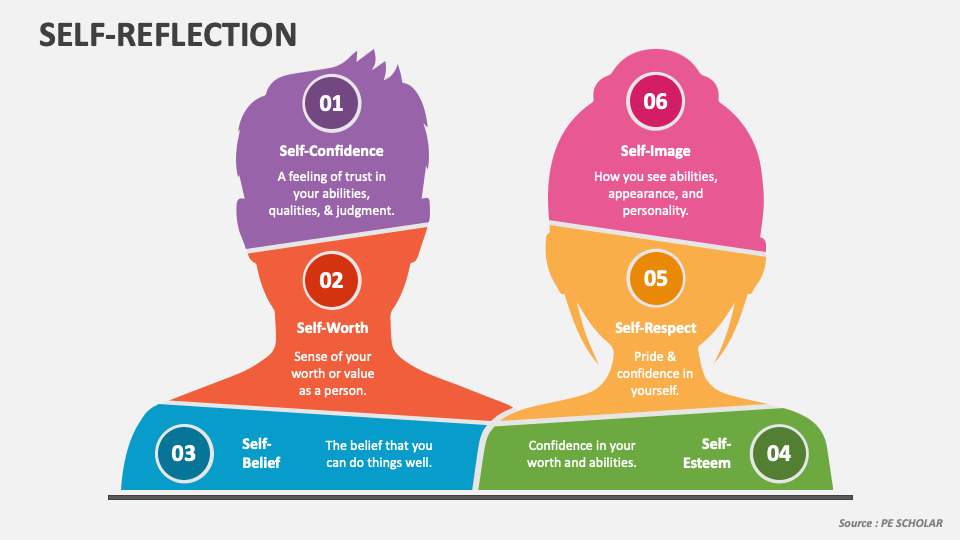


10. Reflect and reward yourself


Reflection and self-reward are vital practices for personal growth and sustained motivation. Taking time to pause and genuinely assess my actions, feelings, and decisions allows me to gain valuable insights into my strengths, weaknesses, values, and beliefs. This deliberate introspection helps me identify patterns in my behavior, ensuring my actions align with my core values and long-term goals. Equally important is the act of rewarding myself, which serves as a powerful form of positive reinforcement and self-love. Acknowledging my hard work and celebrating milestones, no matter how small, boosts my self-esteem and provides a sense of accomplishment that fuels future efforts. Without these moments of recognition, it would be easy to get caught up in the daily hustle and lose sight of progress, leading to burnout and a lack of fulfillment. Ultimately, combining thoughtful reflection with well-deserved rewards creates a powerful cycle of learning, motivation, and continuous self-improvement, enabling a more purposeful and satisfying life.


CONCLUSION

 A conclusion for a discussion on social practices should summarize their role in shaping society and driving change. It can highlight how formal and informal social organization provides both structure and community, and how collective action and individual agency are necessary to address complex issues like poverty, inequality, or environmental concerns. For specific fields like social work, a conclusion might focus on the importance of ending relationships and evaluating the effectiveness of interventions, while for corporate social responsibility, it would emphasize benefits like trust and sustainability. 
 
Key themes for a conclusion on social practices:
    • Societal Shaping: Social practices, both formal and informal, are fundamental to shaping society, influencing everything from daily interactions to global governance.
    • Driving Change: Social practices are powerful drivers of change, whether through social movements that challenge norms and influence policy or through structural changes and collective action that address large-scale problems.
    • Interplay of Individual and Collective: Addressing social issues requires a dual approach—collective action to tackle interconnected problems and individual agency for personal and local change.
    • Practical Application: Conclusions should move beyond summary to discuss implications, such as the practical application of social practices in fields like social work or corporate social responsibility.
  • Sustainability and Equity: Efforts to change social practices are crucial for promoting a sustainable future and reducing inequalities that lead to problems like poverty and violence. 


Examples of conclusions for specific contexts:
  • In social science research: Conclude by summarizing key findings, emphasizing the significance of social practices for understanding societal change, and identifying implications for future research and policy.
  • For social work: A conclusion can stress the importance of the ethical and planned ending of cases and relationships to ensure accountability and effective outcomes.
  • For corporate social responsibility: A conclusion might state that social responsibility is a vital practice for businesses, building trust and loyalty while contributing to a sustainable future.
  • For environmental change: Conclude by reiterating that sustainable transformation of practices, and not just individual persuasion, is necessary to address climate change. 


  •